My Books
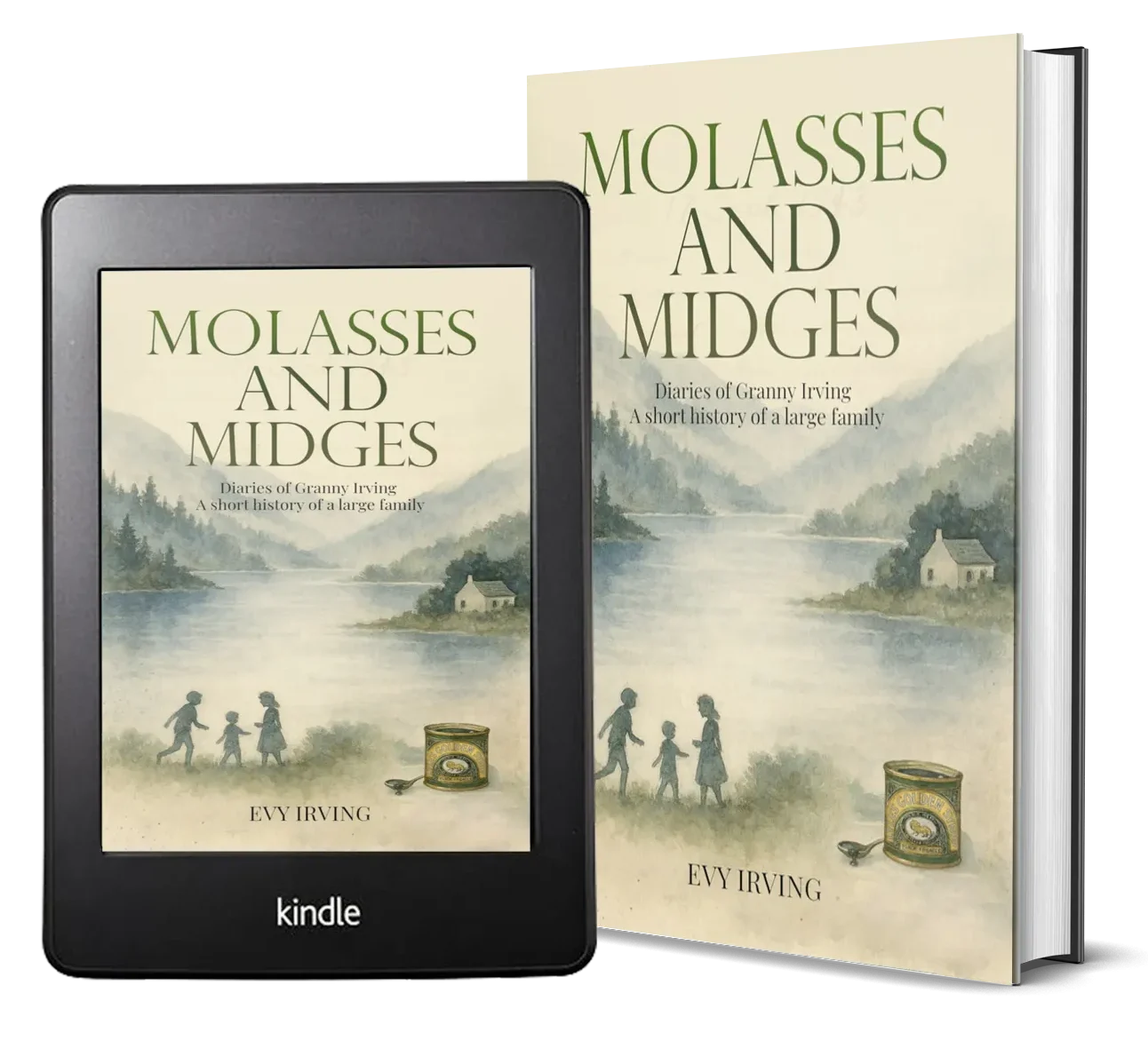
MOLASSES AND MIDGES
Diaries of Granny Irving: A short history of a large family
Step back in time to the windswept Highlands of Scotland and into the bustling, love-filled home of the Irving family. In this beautifully compiled and lovingly edited diary, Evelyn Hunck-Irving brings to life the voice of her mother, Catherine Gladioli Irving—affectionately known as Granny Irving—a resilient wartime bride, mother of nine, and master of making do.
Spanning decades of handwritten notes and daily reflections, Molasses and Midges paints an honest, humorous, and deeply human portrait of family life in post-war Britain. From tales of emigrating to Canada and back, to wrestling with coal shortages, midges, mischievous children, and mountains of laundry—every entry pulses with heart, wit, and endurance.
Part memoir, part social history, this is a celebration of one woman’s strength and spirit, and a tribute to the generations she inspired. Whether you’re a lover of family sagas, Scottish heritage, or just appreciate the quiet power of everyday life, Molasses and Midges is a story you’ll carry with you long after the final page.

Bondhu’s Bairns:
Part two of Granny Irving’s Diaries: Follow-up from Molasses and Midges
The BIG MOVE from Dunoon to a cottage in the Scottish Highlands, was a turning point in the life of the Irving family. For Gladys, it increased the challenge of managing her ever-growing family. A practical and loyal wife, she learned to become an expert in thrift, time management and the Scottish art of ‘making do’. Never did she complain about coping on a forester’s modest wage nor the challenge of clothing, feeding and loving ten active children. Never did she abandon her diary entries.
This large “Irving family” became well-known in Glen Lyon during the 1950s. Gladys’ diaries show how her family made an impact on the lives of most for miles around. From dignified landentry to humble travellers, all would drop in to enjoy a maskin’ o’ tea or to leave crates of apples or even more welcome, outgrown children’s clothing. Salesmen pedalling anything from carpets or shoelace to the grocery vans packed with daily necessities were the stream of contacts who kept loneliness at bay.
Eventually, when her husband turned to farm work, animals provided a source of food. But chickens ran loose, cats hid kittens, and calves and lambs fell sick. All animals, with two or four legs, were brought to Gladys. She crammed them all into her busy life.
A constant for Gladys was her diary, her reading and her studying. This book tells how this remarkable woman found the time.